

2022 -2026

Pehuamar. Luciana Rondolini
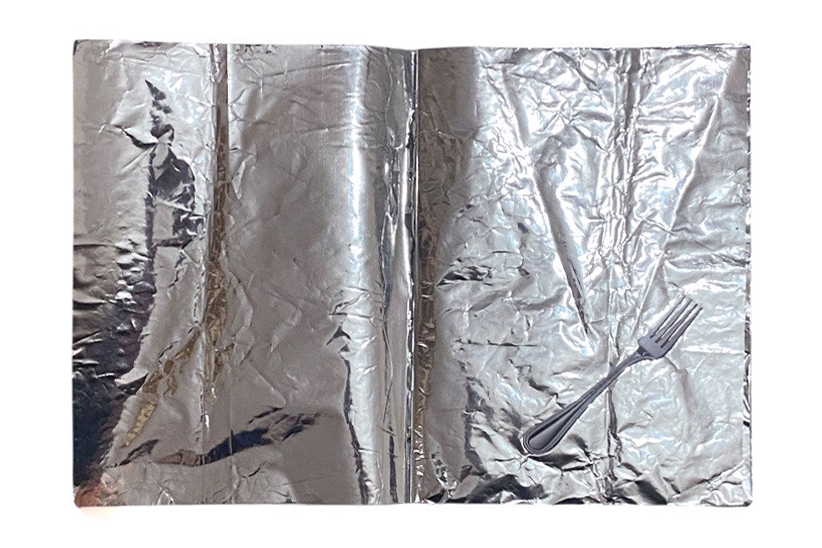
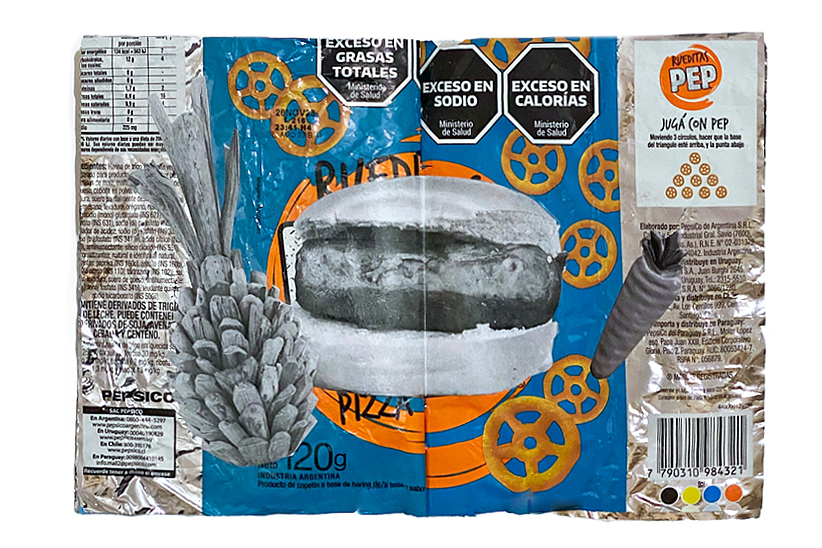
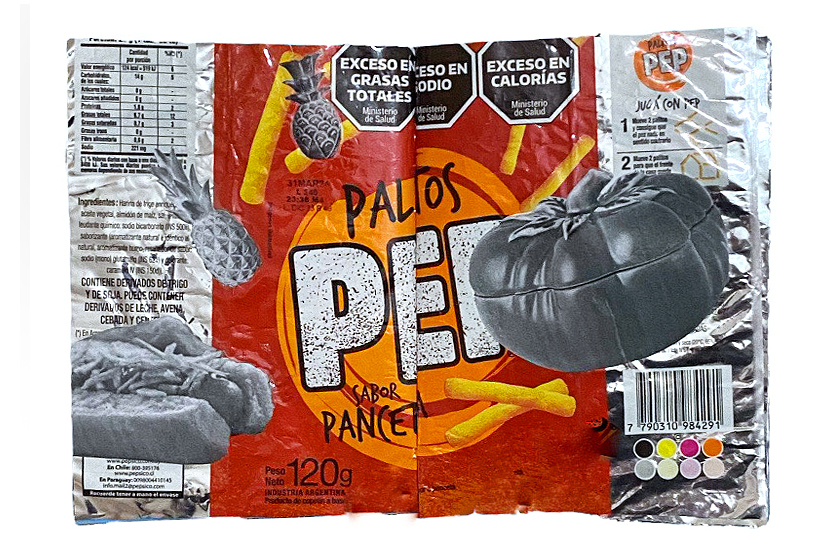
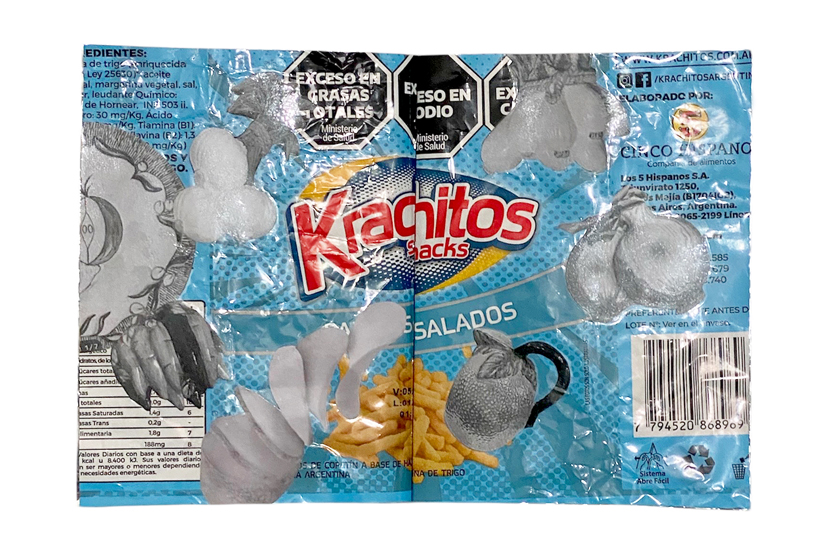
It is not easy to clarify what my interest in this topic is; I can only say that I have a suspicion that we are all gifted, but because we are intoxicated, we are not using our greatest potential when it comes to thinking and existing in this world. Have you ever accidentally smelled an empty bag of potato chips? If it’s Pehuamar, I can assure you that you won’t want to try sticking your nose inside that bag twice. For starters, you would first have to try to separate the two internal walls covered by the thick, greasy crust that forms when oil goes rancid, just to manage to get your fingers all the way to the bottom and unstick the adhered plastic.
The things that are always there to make you feel better when you’re broke, when the world is shit, when you’re tired or just wasting time and need something to cheer you up, usually turn out to be a short-lived placebo.
There’s Coca-Cola, Lays, Ugi’s, Pepsi, Krachitos, to comfort you. Coca-Cola, with its designed red logo, being a consolidated multinational corporation, is always a good choice to enjoy a good moment. When you take a sip of Coca-Cola, you are drinking an international liquid. A symbol of quality and legitimacy that kinships you with the Swede who lunches every single day with a little can of Coke. Certainly, one problem is knowing that all of us are intoxicating ourselves daily on a voluntary basis. It’s a modest problem; surely there will be people who think this isn’t a major inconvenience.
Since I am outraged by this mass food production system that trades money for animal suffering and human illness, I stopped eating meat, I no longer drink Coca-Cola, and I buy coconut sugar. Yes, I know it sounds ridiculous, but I try to eat healthy, even though there is always a Trojan horse ready to break my spirit, and in my case, what gets me, among other things, is sugar. When I get home at night, exhausted, two blocks before arriving I’m already thinking about the pizza I’m going to eat and the bliss of not cooking. While I wait for it, if I don’t have dessert, I cross over to the kiosk to get something sweet—preferably domestic industry, because Mondelez ruined every single candy on the market. And if I buy fried empanadas from this very same pizzeria (I don’t recall ordering baked empanadas a single time in the 10 years I’ve lived here), I try not to order more than three. I order them very occasionally, and I have to eat them with extreme care because they drip, in a waterfall, cheese and fried whey. My hands and mouth, soaked in oil, shine as if I’d had a facial treatment, emanating a pungent, oily-yellow scent that I need to clean off the exact second after swallowing them. I find this need to wash my hands highly contradictory, just to stop smelling what a minute ago I couldn’t stop devouring. Is it that when we consume, we enter a trance and lose consciousness of what we are ingesting? Fat and oil have always had a bad reputation. Partly because of cholesterol, and partly because they distance you from the habits of righteous living. I have a book about the history of snobbery that opens by quoting Balzac: “Nothing is so painful as to be like everyone else.” Everyone likes fat.
Why is it that grasa means grasa? That is to say, an ordinary person of vulgar preferences and habits, who has no good taste in dressing, or who eats with their mouth open and slurps noisily, or has a preference for kitsch. There is also the updated version of being grasa, which is being shallow or stupid and acting undiplomatically—essentially, doing whatever. It seems Evita used to speak of “my dear grasitas” to refer to humble people who were dirty and whose hair was «greasy» from the sebum accumulated due to a lack of hygiene. This included workers who got greasy and dirty in general in workshops, factories, and construction sites. It is precisely in Buenos Aires, during the mid-1940s, that the word grasa emerged to identify a person with habits deemed vulgar and rustic tastes. Which leads me to reflect: Does eating crap make you lower class? I don’t think so; I think we are all pierced by this problem, which is an international malady. Nothing is more common and democratic than eating and drinking. However, if we talk about culinary snobbery, it consists of eating exceptional, highly expensive, or very rare products, or perhaps eating them cooked in an exotic way. Nowadays, consuming an exotic fruit would be something like finding red, tasty tomatoes grown without pesticides at the neighborhood greengrocer. If culinary snobbery is the tendency of some people to display a pretentious and critical attitude toward food, often based on stereotypes of what is considered «good» or «bad» food, I plead guilty and sentenced. Clearly, my stance could be interpreted as an attitude of culinary superiority and a disdain for common food, but I believe it is simply that, knowing something is bad for me, if I can avoid it, I won’t eat it.

